

Intermodal Transport: Meaning, Advantages, and Sustainability
One of the most innovative and efficient solutions in the logistics sector when it comes to transporting goods over long distances. When is this option convenient?
What intermodal transport means
Intermodal transport is a goods movement system that combines the use of two or more transport modes (such as truck, train, ship, or plane) within the same journey, without directly handling the cargo itself.
This is possible thanks to the use of standardized units, such as containers, swap bodies, and semi-trailers, which can easily be transferred between different transport modes.
Intermodal transport is used when large quantities of goods need to be transported over long distances.
The main goal of intermodal transport is to optimize logistics efficiency, reducing time, costs, and environmental impacts while ensuring the safety and integrity of the goods throughout the journey.
Types of intermodal transport
Rail intermodal transport
Uses trains for long-distance cargo movement, reducing costs and emissions compared to road transport. It is generally combined with trucks for local collection and distribution routes (first/last mile).
This category includes:
Container transport on rail wagons
Craneable semi-trailers
Rolling highway (RoLa), where the truck or semi-trailer travels on the train
Maritime intermodal transport
Combines maritime shipping (mainly via container ships and Ro-Ro) with road or rail transport. It is the primary solution for international and intercontinental shipments.
Main modes:
Lo-Lo (Lift on/Lift off): containers lifted by cranes
Ro-Ro (Roll on/Roll off): vehicles and semi-trailers driven directly onto ships
Short Sea Shipping for intra-European or short-distance routes
Air intermodal transport
Uses air transport as the primary mode for long-distance, urgent routes, integrated with trucks (and sometimes high-speed trains) for ground distribution. It is ideal for high-value, perishable, or time-critical goods.
Typical loading units:
ULD (Unit Load Device) such as aviation pallets and containers
Combined road–air transport to transfer ULDs between airport hubs and logistics centers
In some advanced systems: rail–air links for faster distribution
Combined multimodal systems
Integrate multiple transport modes (road, rail, sea, and air) into a single coordinated logistics chain, without handling the goods inside the loading unit.
Main goals:
Optimize time and costs
Reduce environmental impact
Improve safety and reliability
Ensure continuity in the logistics flow
The Advantages of Intermodal Transport
Combined transport offers several advantages compared to road-only transport. Here are the main ones:
Operational Efficiency: The use of standardized containers speeds up transfers between transport modes. The combination of modes allows choosing the most efficient option for each leg of the journey.
Cost Reduction: Rail or sea transport is often more economical than road transport over long distances. Lower fuel and maintenance costs thanks to route optimization.
Greater Flexibility: Ability to adapt quickly to market demands and logistics conditions. Integration with hubs and logistics centers to improve goods distribution.
Reduced Environmental Impact: The use of trains and ships, which are more energy-efficient than trucks, reduces CO₂ emissions. Better resource utilization through optimized routes and reduced road traffic.
Sustainability
Sustainability is one of the main reasons why many companies are adopting intermodal transport.
Here is how this mode contributes to a greener future:
Emission Reduction: According to recent studies, rail transport emits about 75% less CO₂ per ton-kilometer compared to trucks. The combined use of trains and ships can significantly reduce the ecological footprint of freight transport.
Less Road Congestion: Shifting freight to rail or sea decreases road traffic, reducing accidents, delays, and air pollution.
Support for the Energy Transition: Many rail and maritime fleets are adopting low-emission technologies, such as alternative fuels and electric systems.
Circular Economy: Container standardization promotes resource reuse and reduces material waste.
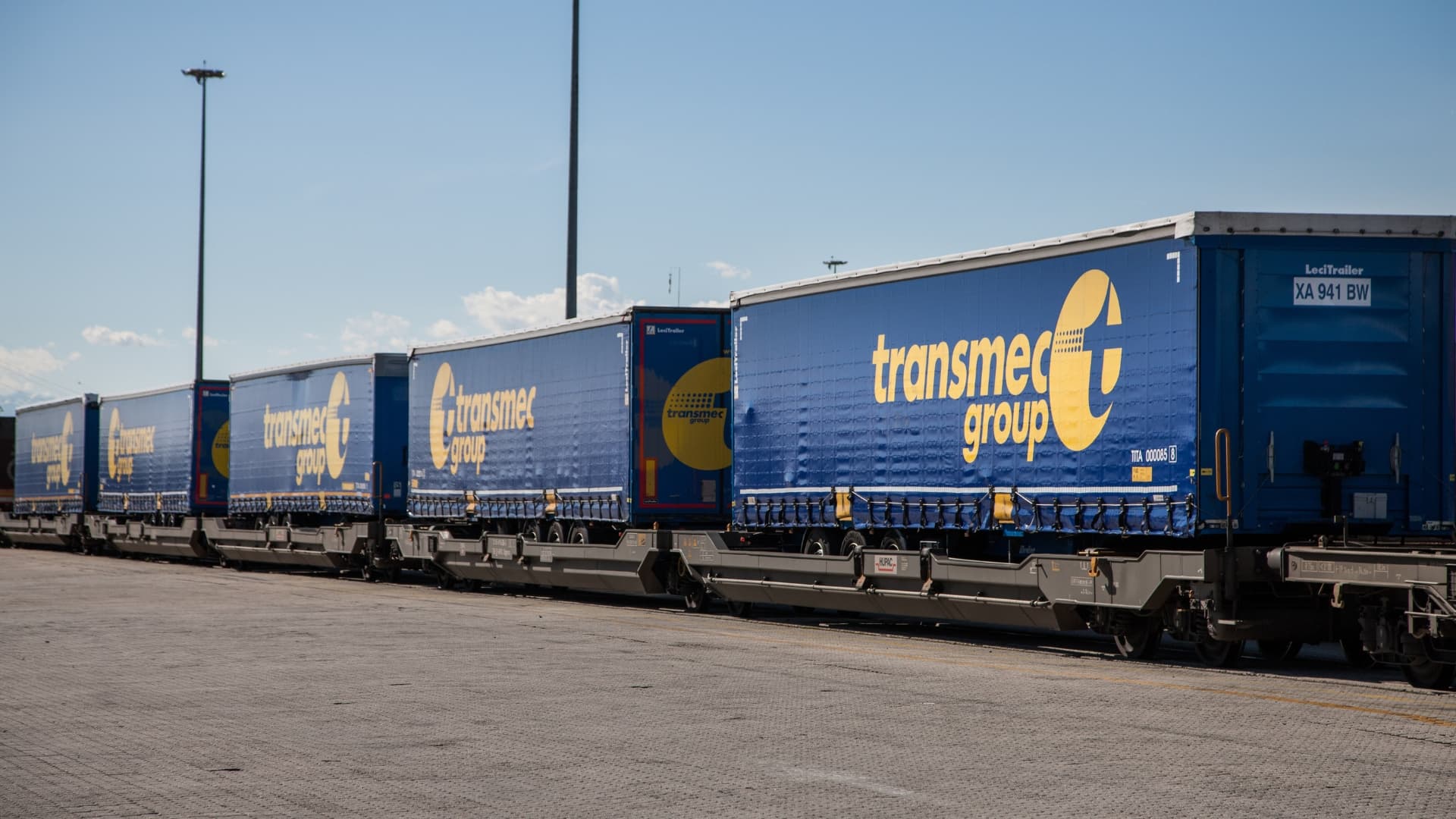
Our support for intermodal logistics
Intermodal logistics plays a crucial role in ensuring that goods reach their destination safely and promptly.
Companies must partner with expert providers who can manage the complexity of intermodal shipment planning.
A well-organized service not only improves delivery reliability but also contributes to more sustainable resource management.
Adopting intermodal transport means investing in the future: a future where logistics is not only efficient, but also environmentally responsible.
At Transmec, we handle intermodal transport thanks to our proprietary rail terminals and trains, as well as agreements with major shipping companies.
Ask one of our intermodal transport experts for a consultation.