

Supply Chain: What It Is and How It Works
Beyond simple logistics: how to manage phases, models, and new technologies to build a value-driven supply chain.
What is a Supply Chain?
The supply chain is the entire ecosystem of activities, people, organizations, information, and resources involved in moving a product or service from the supplier to the end customer.
Unlike past definitions, today we view it as an interconnected network (Supply Network) rather than a linear sequence.
Its goal is to maximize the value generated while minimizing costs and ensuring maximum resilience against market disruptions.
The 5 Key Phases of the Supply Chain
To manage a supply chain effectively (SCM), nothing can be left to chance.
There are five fundamental pillars that every company must manage:
Planning (Demand Planning): The use of predictive analytics to forecast demand and balance inventory and production.
Procurement (Sourcing): Supplier selection, negotiation, and inbound flow management.
Production (Manufacturing): Efficient transformation (often following Lean Manufacturing principles).
Logistics and Warehousing: Warehouse management (WMS) and goods movement.
Returns Management (Reverse Logistics): A critical element for modern e-commerce and circular sustainability.
Types of Supply Chains: Which One to Choose?
Not all supply chains are created equal. Choosing the right model depends on your target market:
Model | How It Works | Ideal For |
Push (Traditional) | Production is based on historical sales forecasts. | Standard products with stable demand. |
Pull (Reactive) | Production starts only when a customer order is received. | Customized or high-value products. |
Synchronized | Real-time data sharing across all partners. | E-commerce and high-velocity markets. |
Agile | Maximum flexibility to manage sudden spikes or crises. | Fashion, technology, and luxury goods sectors. |
The Engine of Supply Chain 4.0
Digital transformation enables a shift from reactive to proactive management, where total visibility and extreme efficiency become standard operations.
Thanks to an interconnected technological ecosystem, companies can now rely on tools that reduce human error and accelerate response times. Technologies redefining the sector include:
Artificial Intelligence: Essential for predictive demand analysis, AI optimizes inventory and supports decision-making based on future scenarios, drastically reducing waste.
IoT (Internet of Things): Connected sensors and devices ensure real-time tracking of every shipment, providing continuous data on location, temperature, and cargo integrity.
Blockchain: A technology that guarantees maximum transparency and security in the supply chain, making every transaction and transfer of ownership immutable and easily traceable.
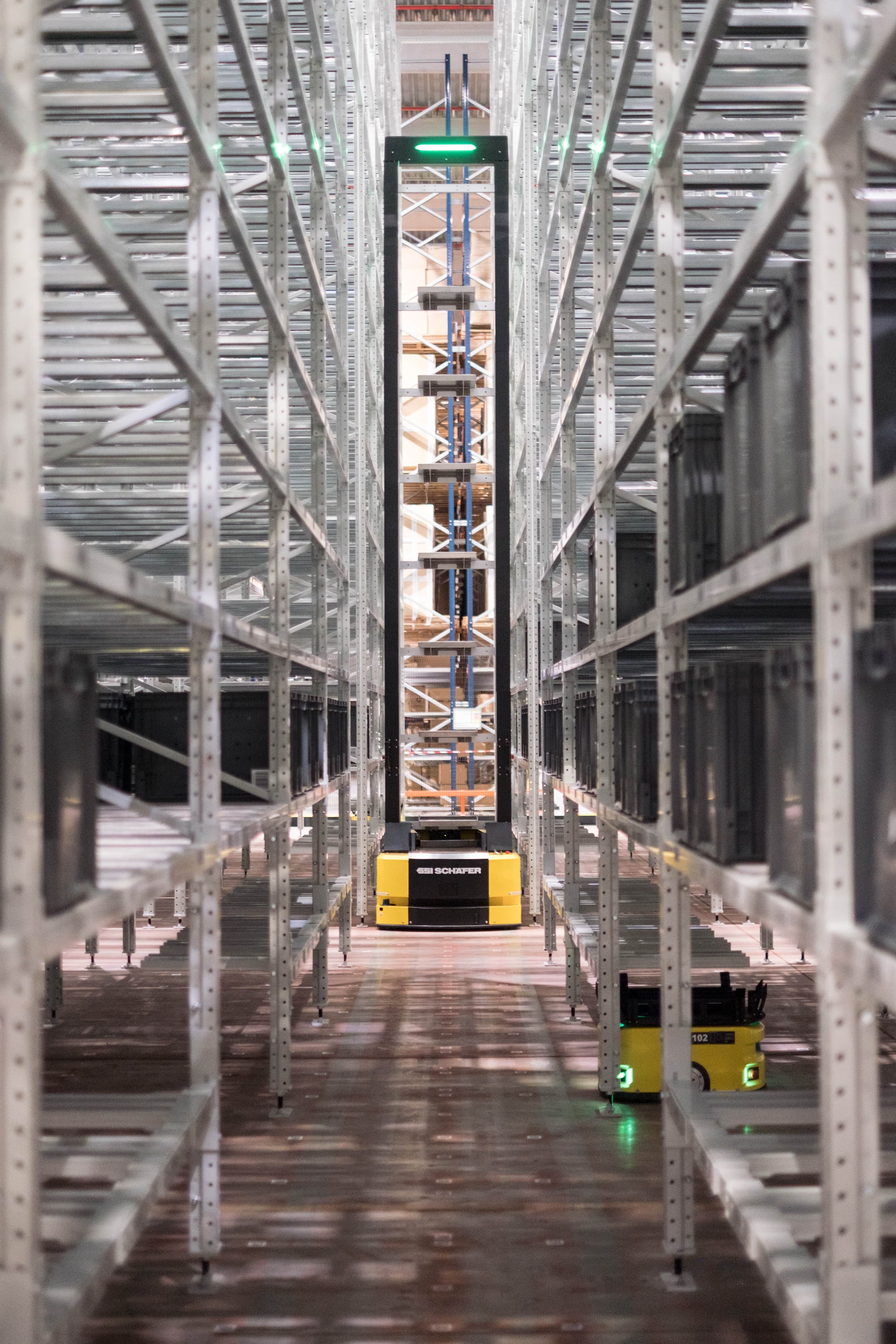
Logistics Automation: From robotic warehousing to advanced management software, automation handles growing volumes with surgical precision and reduced operating costs.
Adopting these innovations builds a resilient and transparent supply chain capable of converting raw data into strategic business insights.
Sustainability: The Future of the Supply Chain
Navigating the global market requires a forward-looking partner.
At Transmec, we don't just transport goods: we build value through complete, tailored management of your supply chain.
From integrated logistics to customs services, we put our expertise and global network at your service: contact a logistics consultant today.
Difference Between Supply Chain and Logistics
The supply chain is the entire ecosystem connecting the supplier to the final consumer.
More than a sequence of phases, it acts as the company's central nervous system: sensing market demand signals and coordinating production, ensuring every department operates in perfect sync.
Effective management yields immediate benefits: maximizing operational efficiency, eliminating unnecessary costs, and ensuring excellent customer service through punctual and reliable deliveries.
However, it is crucial not to confuse it with logistics. If logistics is the operational "arm" dedicated strictly to the physical movement and storage of goods, the supply chain is the strategic "brain".
While logistics focuses on optimizing transport and warehousing, the supply chain also integrates marketing, finance, and supplier relations, turning a simple product flow into a lasting, resilient competitive advantage.
Measuring Success: The KPIs That Matter
To evaluate whether your supply chain is performing, track the right metrics:
Lead Time: How much time passes from order placement to delivery?
Inventory Turnover: How many times do you clear inventory per year?
Perfect Order Rate: What percentage of orders arrive at their destination defect-free, undamaged, and on time?
Total Cost: What is the real impact of logistics and storage on your revenue?
Transform Your Supply Chain with Transmec
Navigating the global market requires a forward-looking partner.
At Transmec, we don't just transport goods: we build value through complete, tailored management of your supply chain.
From integrated logistics to customs services, we put our expertise and global network at your service to make your business more flexible and competitive: contact one of our consultants today.