

Logistics and Transportation: Strategic Guide to the Modern Supply Chain
From planning to outsourcing: a comprehensive guide to tools, processes, and competitive advantages for the Supply Chain.
What are Logistics and Transportation really?
In today's hyper-competitive global market, logistics and transportation are no longer simple operational functions, but true strategic assets.
Whether dealing with a small business or a multinational corporation, the ability to smoothly manage the supply chain determines business success or failure.
Often used as synonyms, these two terms indicate complementary yet distinct realities:
Logistics: It is the "brain" of the operation. It includes the planning, organization, and management of commodity and information flows. It handles what to move, when, and where to store it.
Transportation: It is the operational "arm." It represents the physical movement of goods across various modes (road, rail, sea, air).
The synergy between these two elements ensures that the right product reaches the right customer, at the exact right time, and at the lowest possible cost.
What is Logistics? Definition
To understand the sector, we must start with a rigorous definition.
Logistics is not just "moving boxes," but the science of planning, implementing, and controlling the efficient flow of raw materials, semi-finished products, and finished goods, along with related information, from the point of origin to the point of consumption.
Drawing on models of excellence in the B2B sector, it is essential to distinguish between two critical phases:
Inbound Logistics: Relates to supplier relations, raw material receiving, and initial storage. Excellent inbound logistics reduces production downtime.
Outbound Logistics: Is the heart of distribution. It includes picking, packaging, and final delivery to the customer or distributor.
Key Functions: From Inventory Management to Lean Logistics
An efficient logistics and transportation system must oversee five key areas:
Strategic Planning: Demand analysis to optimize flows.
Inventory Management: Using techniques like Just-in-Time to minimize storage costs without risking stockouts.
Professional Warehousing: Not just storage, but sorting centers where space is optimized to speed up operations.
Transport and Distribution: Carrier selection and load optimization to reduce economic and environmental impacts.
Information Systems (WMS and TMS): Use of management software for real-time traceability (tracking).
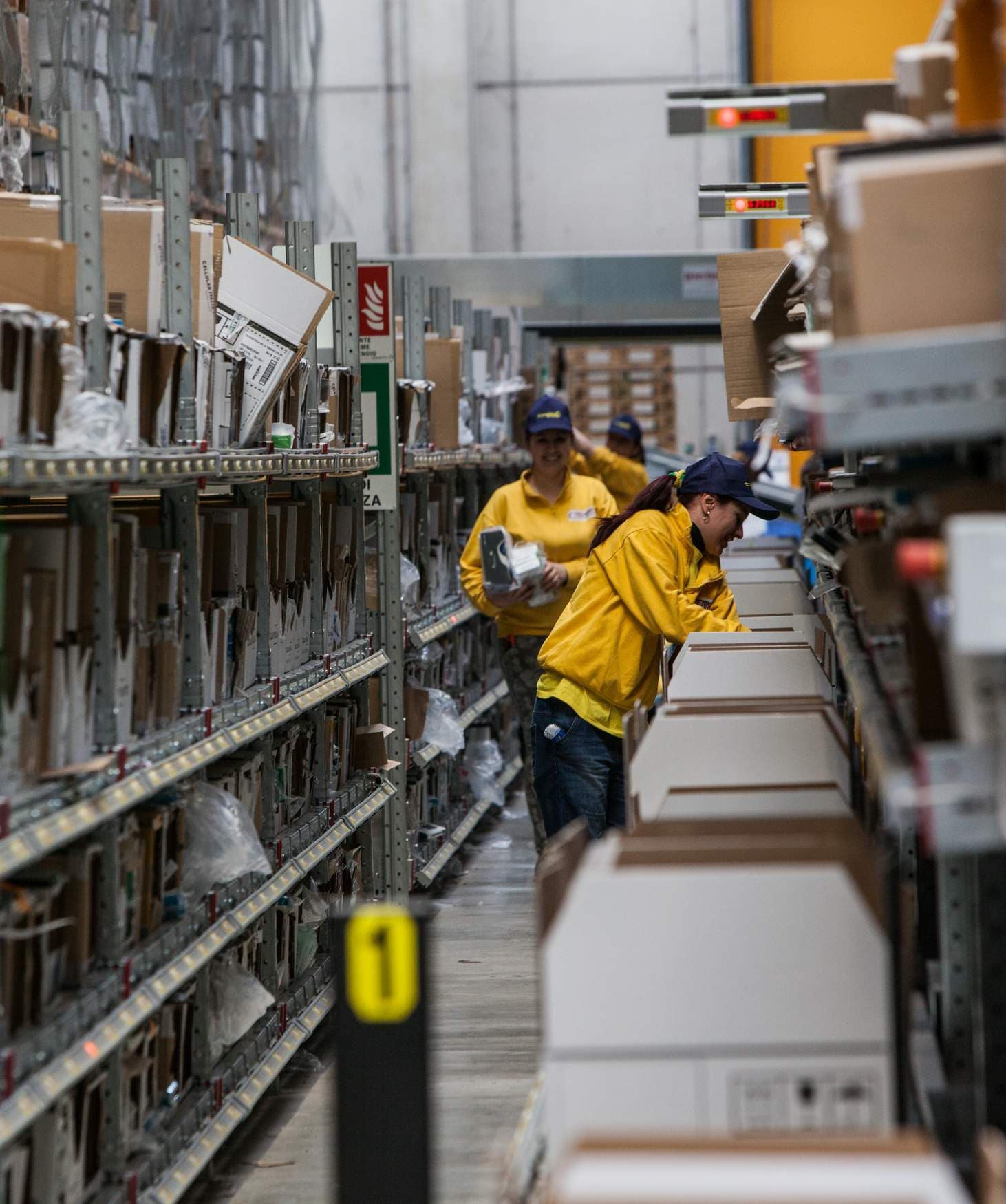
The Importance of Logistics Outsourcing
Navigating the global market requires a partner who can look ahead.
At Transmec, we don't just transport goods: we build value through complete, tailored management of your supply chain.
From integrated logistics to customs services, we put our experience and global network at your service: contact a logistics consultant today.
Trends and Future: Sustainability and Digitalization
Many companies today choose outsourcing by relying on an experienced logistics partner, allowing them to:
Transform fixed costs (warehouses, staff, vehicles) into variable costs.
Access advanced technologies without heavy upfront investments.
Focus on their core business (production or sales).
Optimize Your Flows with Transmec
In a future dominated by e-commerce and speed, investing in a flexible and technologically advanced distribution chain is no longer an option, but a necessity to remain competitive.
Contact a Transmec logistics consultant to design a flexible, technological distribution system ready for global market challenges.