

CFR Incoterms: Complete Guide
Everything you need to know about the separation between transport costs and responsibility for the goods.
The Meaning of CFR
The CFR incoterm, or Cost and Freight, establishes that the seller is responsible for paying the transport costs up to the agreed port of destination.
However, the risk is transferred to the buyer as soon as the goods pass the ship's rail at the port of departure.
This means that, while transport costs are borne by the seller, any damages or losses that occur after loading are the buyer's responsibility.
The Advantages of Using CFR
The adoption of the CFR Incoterm presents numerous advantages for companies:
Simplicity in Logistics Planning: With a single incoterm, companies can simplify their logistics processes, knowing exactly what costs they must face.
Control over Transport Costs: Sellers can negotiate competitive rates with transport service providers, reducing overall costs for the buyer.
Less Complexity in International Transactions: With a clear division of responsibilities, conflicts and misunderstandings among the involved parties are reduced.
How does CFR delivery work in practice?
The CFR (Cost and Freight) Incoterm is one of the most widely used clauses in maritime trade, but it requires attention due to the separation between the place where costs transfer and the place where risks transfer.
Here is how a CFR shipment operates in practice:
1. Planning and Transport Contract
The seller does not merely organize the transport, but has the legal obligation to stipulate, at their own expense, a maritime transport contract to bring the goods to the agreed port of destination.
They must also choose a suitable ship and promptly communicate the shipment details to the buyer so the latter can organize the reception.
2. Allocation of Costs (Up to Destination)
The seller assumes the economic burden of almost the entire initial logistics chain:
Loading costs: Loading the goods onto the ship at the port of departure.
Maritime Freight: The cost of the sea voyage up to the port of destination.
Accessory costs: Any handling costs at the port of origin (THC - Terminal Handling Charges).
Note: The seller is not obliged to pay for insurance (which remains at the buyer's expense and discretion).
3. The Critical Transfer of Risk
This is the most delicate point: although the seller pays for transport up to the destination, the risk of loss or damage transfers from the seller to the buyer the moment the goods are loaded on board the ship at the port of departure.
Why is this important? If the goods suffer damage during a storm in the middle of the ocean, the buyer is responsible and must still pay the seller, possibly seeking reimbursement from their own insurance (if taken out).
4. Customs Clearance and Documentation.
Export (Seller): The seller must manage and pay for all export customs formalities, obtaining licenses, authorizations, and paying any exit taxes.
They must also provide the buyer with the transport document (usually the Bill of Lading).Import (Buyer): Once the ship arrives at the port of destination, all import customs clearance costs, customs duties, local taxes, and unloading costs from the ship (if not included in the freight) are borne by the buyer.
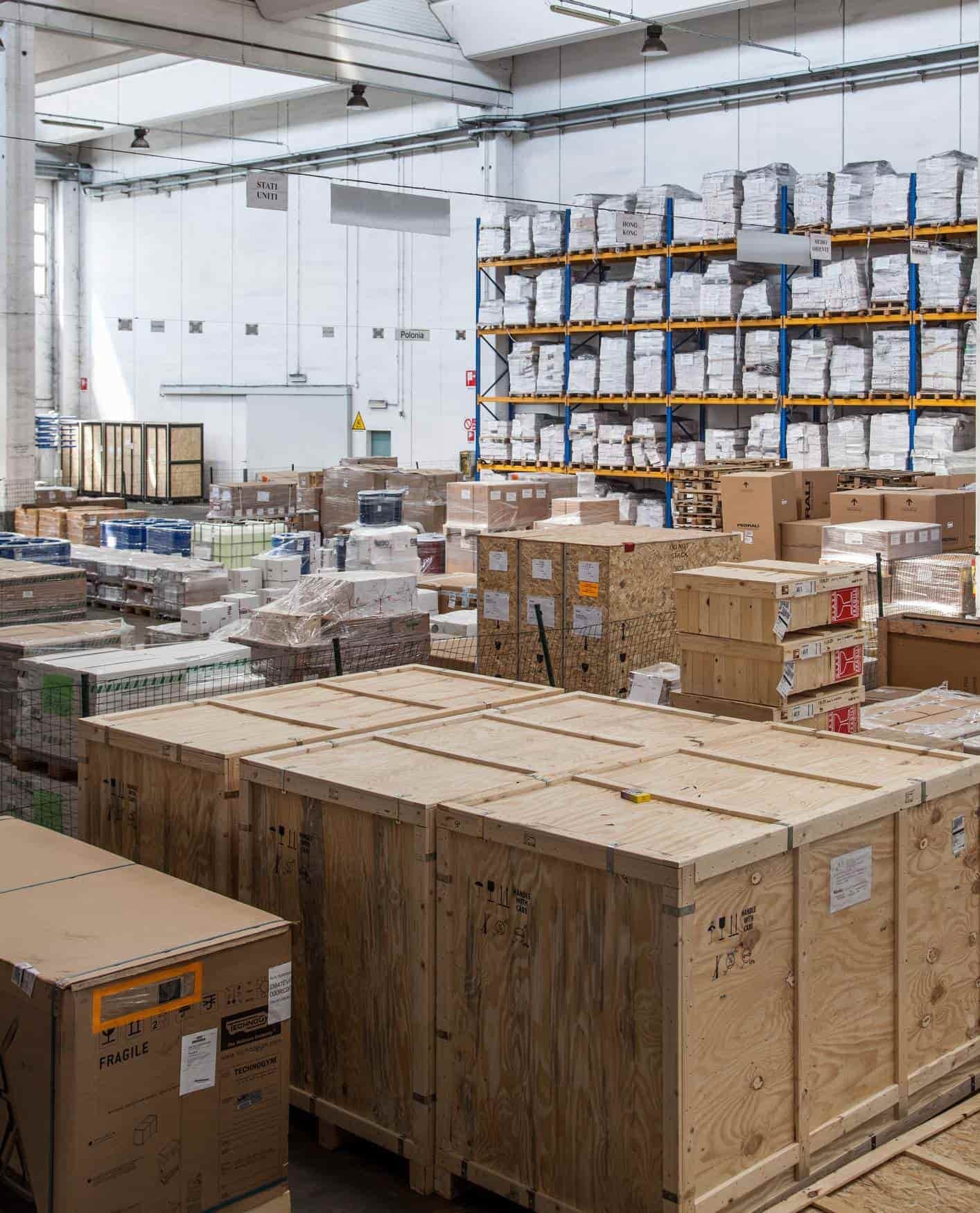
Practical Example of the CFR Incoterm
Let's imagine an Italian company exporting machinery to Brazil.
If they use the CFR Incoterm, they will take care of packaging and transporting the machinery to the port of Genoa.
Here the goods will be loaded onto a ship bound for Brazil.
Once loaded onto the ship, the responsibility passes to the Brazilian importer, who will have to face all the risks associated with the shipment from that moment on.
Differences Compared to Other Incoterms
Unlike other terms such as CIF (Cost, Insurance and Freight), where insurance is included in the price of the shipment, CFR does not mandate any compulsory insurance coverage.
This makes it relevant for the buyer to assess whether taking out separate insurance is necessary to adequately protect the goods during maritime transport.
Our support for CFR deliveries
The CFR Incoterm – Cost and Freight is widely used in maritime shipments and represents a good balance for those who want the seller to handle the main transport up to the port of destination, while leaving the risk management to the buyer from the moment of boarding. This characteristic, while on one hand simplifying the organization of transport, on the other hand requires particular attention at the moment of the transfer of risks, the choice of the carrier, and the management of port operations.
If your company needs assistance for shipments with CFR delivery, for the management of maritime transport, or for support in selecting the most advantageous Incoterm, our team is ready to assist you. We offer you specialized advice and tailor-made logistics solutions, ensuring efficient, transparent shipments in compliance with international regulations.